Apple Cider Vinegar Gummies vs Ozempic: How Do They Compare?

Independent nutrition & weight-management research · Updated September 3, 2026 · reviewed by the Gumitide Research Team
| The short version | They are not competitors — they are different categories. Ozempic is a prescription GLP-1 medication; apple cider vinegar gummies are an everyday food supplement. |
| How you get it | Ozempic requires a doctor and a prescription. ACV gummies are available over the counter. |
| What a gummy is for | Supporting everyday habits — appetite awareness and a consistent routine — not treating a medical condition. |
| Best first step | Talk to your doctor about medication; for a supplement, check the label and, if unsure, ask your pharmacist. |
Apple cider vinegar gummies vs Ozempic: comparing two very different things
Search interest in weight-management medications has exploded, and it is natural to type “apple cider vinegar gummies vs Ozempic” into Google to see how a simple daily gummy stacks up against the injection everyone is talking about. The honest answer, and the most important thing to understand before we go any further, is that these two are not really rivals on the same shelf. One is a prescription medicine chosen and monitored by a doctor; the other is an everyday food supplement you buy without a prescription. Comparing them is a bit like comparing a physiotherapy programme with a good pair of walking shoes — both relate to movement, but they sit in completely different places in your life.
This guide lays the two side by side so you can understand what each actually is, how people use them, and where an apple cider vinegar and BHB gummy realistically fits. Nothing here is medical advice, and a supplement is never a substitute for a medication your doctor has prescribed. If you are brand new to the category, our primer on ACV & BHB gummy benefits is a good companion read.
What Ozempic is (and what it is not)
Ozempic is a brand name for semaglutide, a prescription GLP-1 receptor agonist. It is a medication, prescribed and supervised by a healthcare professional for specific medical situations, and it is administered by injection. Because it is a drug, it comes with a clinical conversation: your doctor decides whether it is appropriate, monitors how you respond, and manages any possible side effects. That oversight is a feature, not an inconvenience — it is how medicines are meant to be used. The scale of what a prescription GLP-1 does is well documented: the STEP 3 randomised clinical trial in JAMA reported the effect of subcutaneous semaglutide plus intensive behavioural therapy on body weight (Wadden and colleagues, 2021) — results no food supplement claims, or should ever claim, to match.
What that means for this comparison is simple: you cannot buy Ozempic off a shelf, you should never start, stop or change it on your own, and no supplement is a “natural version” of it. Any product marketed as an over-the-counter replacement for a prescription drug should be treated with real skepticism.
What apple cider vinegar gummies are
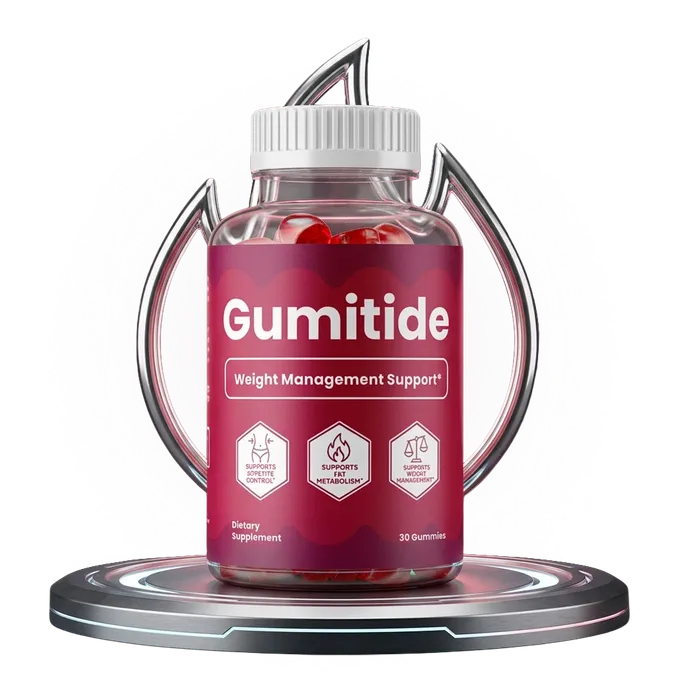
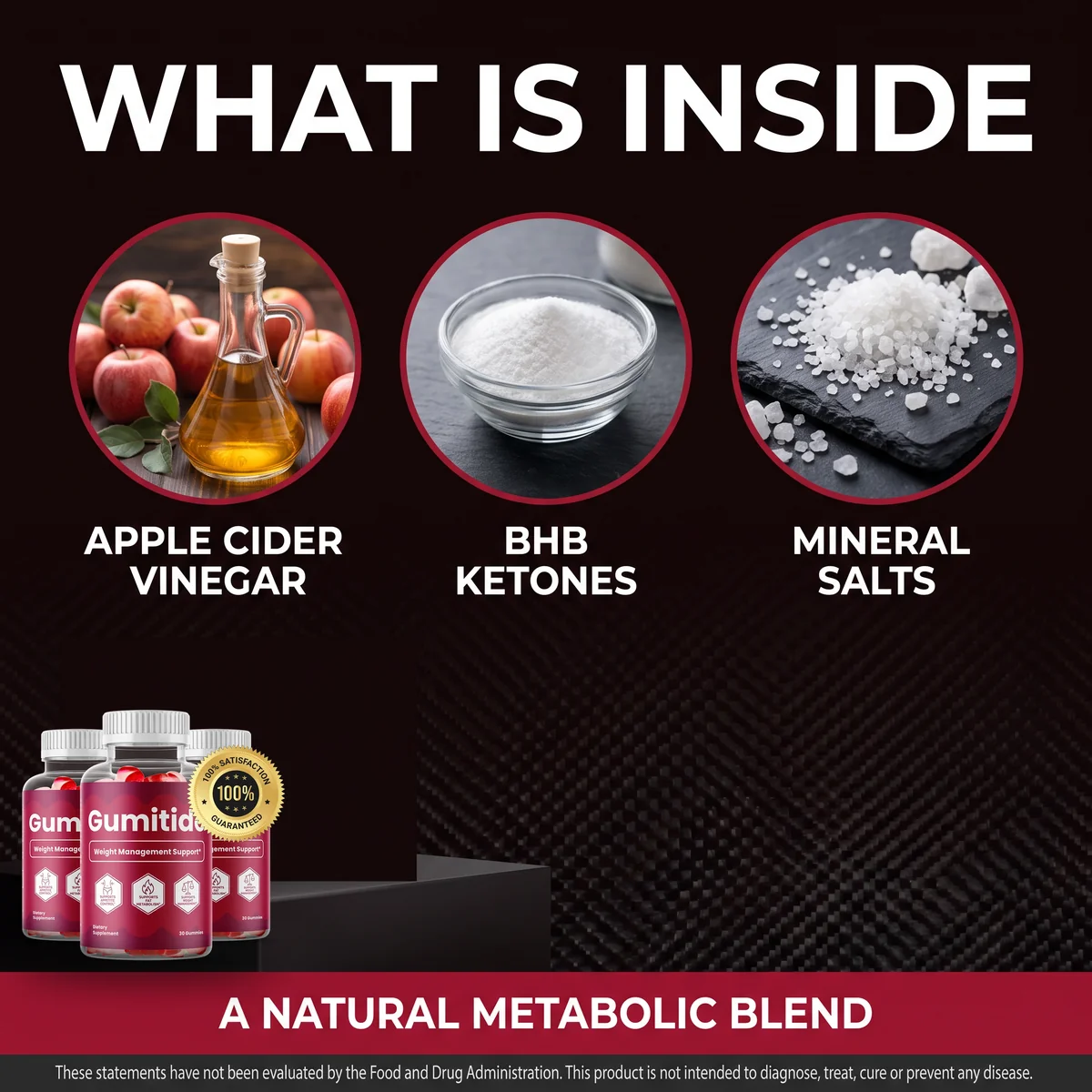
Apple cider vinegar (ACV) gummies are a food supplement. A well-made formula like Gumitide combines real apple cider vinegar with exogenous BHB (beta-hydroxybutyrate) mineral salts in a once-daily, chewable form. They are designed to support the ordinary habits that make up a healthy routine — being a little more mindful of appetite, keeping a consistent daily rhythm, and making the “take my supplement” step easy enough that you actually keep it up. For the supplement side of the ledger, a 2024 randomised, double-blind, placebo-controlled study in BMJ Nutrition, Prevention & Health looked at apple cider vinegar for weight management in young people with overweight and obesity (Abou-Khalil and colleagues).
Crucially, a supplement is not intended to diagnose, treat, cure or prevent any disease, and it is not a medical treatment for any condition. Its job is modest and everyday: to be a supportive part of a balanced lifestyle that also includes sensible food choices and movement.
Side-by-side: the differences that actually matter
1. Category and access
This is the biggest difference. A prescription medication requires a doctor and a pharmacy; a food supplement does not. That single fact changes everything downstream — who decides you should use it, who monitors you, and what claims can legally be made about it.
2. How they work
A GLP-1 medication works through a defined pharmacological pathway that a clinician understands and manages. An ACV gummy is not a drug and does not work like one; instead, apple cider vinegar has a long tradition of everyday use, and exogenous BHB is included as a metabolic-support ingredient. The gummy supports your habits — it does not act as a medicine.
3. Oversight and safety
Because a medication is supervised, safety is handled by your prescriber. With a supplement, the responsibility to use it sensibly sits more with you: read the label, follow the serving size, and check with a professional if you are pregnant, nursing, taking medication or managing a condition. Our detailed guide to ACV gummy side effects and safety walks through this in plain language.
4. Commitment and cost
A prescription medicine is an ongoing clinical relationship with costs that depend on your insurance and pharmacy. An everyday gummy is a low-commitment addition to your routine — you can try it, and multi-bottle packs bring the cost per day down. They are simply not the same kind of decision.
An easy, everyday place to start
Gumitide pairs real apple cider vinegar with BHB mineral salts in one stimulant-free gummy a day — a simple, low-commitment way to support the habits that matter, backed by a 60-day money-back guarantee.
See What’s Inside GumitideWhy so many people search for this comparison
The interest usually comes from one of two places. Some people are curious whether a simple supplement can do what they have heard a medication does — and the fair answer is that a supplement and a medication are different tools for different jobs, so it is the wrong question. Others are already doing the everyday basics — walking, watching portions, sleeping better — and want a small, natural, once-daily habit to support that effort. For that second group, an ACV and BHB gummy is a reasonable, low-pressure choice, while a medication remains a conversation to have with a doctor. The same search pattern drives interest in berberine, which is why we wrote a separate guide on ACV gummies vs berberine and the nickname attached to it.

Can you use an ACV gummy alongside everyday habits?
For most healthy adults, a daily ACV gummy is an easy complement to the fundamentals: balanced meals, plenty of water, regular movement and enough sleep. The gummy does not do the work for you — it supports a routine you are already building. If you want a realistic sense of the timeline, our guide on how long ACV gummies take to work explains why consistency over weeks matters far more than any single dose.
What a gummy should never be is a reason to delay a medical conversation you actually need. If a doctor has recommended a medication, or you are considering one, that decision belongs with your clinician — not with a comparison article.
A note on responsible expectations
You will sometimes see supplements marketed with dramatic before-and-after language or framed as an alternative to prescription drugs. That kind of marketing is a red flag. No gummy melts fat overnight, and none is a stand-in for medicine. A trustworthy supplement makes modest, honest claims about supporting everyday habits, shows you what is inside, and points you to a doctor when a medical question is involved. That is exactly the tone we aim for. Honest expectations start with the evidence: a 2025 Nutrients meta-analysis of randomised trials on apple cider vinegar intake and body composition (Castagna and colleagues) describes small, variable effects rather than transformation.

Support your routine, one gummy a day
If you have the everyday basics in place and want a simple, natural habit to build on, Gumitide is made in the USA in an FDA-registered facility and guaranteed for 60 days.
Get Gumitide TodayThe Gumitide Research Team is an independent group of nutrition writers and wellness editors who translate ingredient science and label-reading know-how into plain English. We do not sell medical advice and we are not your doctor — our job is to help you ask better questions and shop more confidently. Every guide is fact-checked against primary sources such as the NIH Office of Dietary Supplements, the FDA and the FTC, and reviewed for accuracy before publishing.
Have a correction or a question? Reach us any time at our contact page or read more about who we are.
Frequently asked questions
Are apple cider vinegar gummies the same as Ozempic?
No. They are completely different categories. Ozempic is a prescription GLP-1 medication (semaglutide) that a doctor prescribes and monitors, while apple cider vinegar gummies are an everyday food supplement you can buy without a prescription. A gummy is not a substitute for, or a version of, a prescription medicine, and it is not intended to diagnose, treat, cure or prevent any disease.
Can apple cider vinegar gummies replace Ozempic?
A supplement cannot replace a prescription medication, and you should never stop or change a medicine your doctor prescribed without talking to them first. ACV gummies are designed to support everyday habits such as appetite awareness and a balanced routine; they are not a medical treatment and should not be framed as one.
Is one safer than the other?
They carry different considerations. Prescription medications are chosen and monitored by a clinician for specific situations and have their own possible side effects. A well-made food supplement is generally well tolerated by healthy adults, but is still not right for everyone, so it is sensible to check with a healthcare professional if you are pregnant, nursing, on medication or managing a health condition.
Which costs less, ACV gummies or Ozempic?
Cost depends entirely on your insurance, prescription and pharmacy for a medication, and on the pack size and offer for a supplement. They are not really comparable line items because they serve different purposes. What we can say is that an everyday gummy is a low-commitment addition to a routine, especially in multi-bottle packs, whereas a prescription medicine involves a clinician and ongoing oversight.
Should I ask my doctor before trying either one?
Yes for the medication, always, because it requires a prescription and monitoring. For the gummy, it is a good idea if you are pregnant or nursing, take prescription medication, or manage any health condition. When in doubt, a quick conversation with your doctor or pharmacist is the safest starting point.
References & further reading
- Wadden TA, et al. “Effect of Subcutaneous Semaglutide vs Placebo as an Adjunct to Intensive Behavioral Therapy on Body Weight in Adults With Overweight or Obesity: The STEP 3 Randomized Clinical Trial.” JAMA, 2021. PMID 33625476
- Abou-Khalil R, et al. “Apple cider vinegar for weight management in Lebanese adolescents and young adults with overweight and obesity: a randomised, double-blind, placebo-controlled study.” BMJ Nutrition, Prevention & Health, 2024. PMID 38966098
- Castagna A, et al. “Effect of Apple Cider Vinegar Intake on Body Composition in Humans with Type 2 Diabetes and/or Overweight: A Systematic Review and Meta-Analysis of Randomized Controlled Trials.” Nutrients, 2025. PMID 41010525
- National Institutes of Health, Office of Dietary Supplements — “Dietary Supplements: What You Need to Know.”
- National Center for Complementary and Integrative Health (NCCIH) — “Dietary and Herbal Supplements.”
- U.S. Food & Drug Administration — “Information for Consumers on Using Dietary Supplements.”
† These statements have not been evaluated by the Food and Drug Administration. This product is not intended to diagnose, treat, cure or prevent any disease. This article is for general information only and is not medical advice; consult a qualified healthcare professional before starting any supplement or making changes to prescribed medication. Ozempic is a trademark of its respective owner and is referenced here for identification only.